
Not Recognizing the “New Me”

Posted by admin | December 10, 2012

Are You Resistant to the Idea of a Wheelchair?

For many newly diagnosed patients, accepting help can be as difficult as accepting the diagnosis itself.  According to some of the members of our Parkinson’s disease community, here are a few signs that you may be struggling with the idea of becoming someone who might need help.

  • Have you found yourself feeling resentful when family, friends or strangers try to assist with something?
  • Have you resisted using a complimentary wheelchair (e.g., at the airport or on cruise ship) out of embarrassment?
  • Have you worried that becoming someone who receives help is going to change your lifelong identity?

If you answered “yes” to any of these questions, you are far from alone.  Many PatientsLikeMe members report that learning to accept help gracefully is one of the most challenging aspects of chronic illness.  And it’s not just allowing the help itself, per se, but seeing yourself in a new light, as one member puts it.  It’s not unusual to take great pride in being a superman or superwoman, the type of handy, resourceful person who does it all and is always helping others in the family or community.  This can be part of your self-image, as well as a source of self-esteem.

So what do you do when you are suddenly the person being helped instead of the helper?  It requires a psychological shift, according to our members, that involves letting go of ego and viewing the care and assistance you are receiving as a gift, not an insult.  It also means communicating frequently and lovingly about the issue, so as to address “the elephant in the room.”  If you can manage the task yourself, speak up and say so politely, advises one patient.  Otherwise, practice saying “thank you” and “I love you” with gratitude, encourages another member.  Ultimately, as our members state over and over, the best tools for coming to terms with the realities of your new life are a positive attitude, humor and support from others like you.

Can you relate to this common hurdle?  Join this insightful discussion in our forum or share your thoughts in the comments section.

The Joy of Being Helpful

Posted by admin | August 27, 2012

Many patients with life-changing conditions report feelings of grief and guilt about no longer being able to do many of the things they did in the past.  As a recent discussion in our forum revealed, however, patients are finding ways to reset their perspective and boost their self-esteem by focusing on what they are still able to give to others, despite the challenges of their illness.

The Joy of Being Helpful

Here are some of the small and large contributions our members have made, helping them to feel good about themselves:

  • Going to the hospice to sit and talk with the residents
  • Sending handwritten letters via snail mail to loved ones
  • Participating in educational events about the role of service dogs
  • Getting good friends together for a gathering to reconnect
  • Volunteering in a food bank to appreciate having food to eat
  • Calling an isolated grandparent or friend regularly on the phone
  • Allowing the cat from down the road to come inside and snuggle
  • Fostering or adopting medically fragile children in the system

Have you found strength – or a renewed sense of purpose – by doing what you can to help others?  Share your experiences in the comments section.  Also, you may want to check out two books recommended by our members for inspiration:  Strong at the Broken Places, about five different patients with chronic illnesses including ALS and Crohn’s disease, and 29 Gifts, written by a multiple sclerosis (MS) patient whose South African healer gave her a prescription of helping others for an entire month.

Spotlighted Blogger: Psoriasis Patient Alisha B. of “Being Me in My Own Skin”

Posted by admin | April 16, 2012

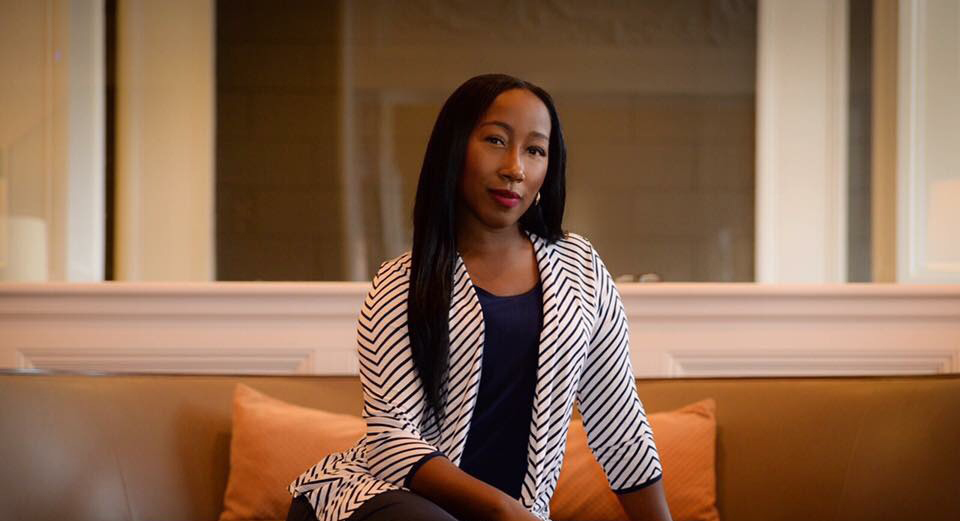
Psoriasis Blogger Alisha B. of "Being Me in My Own Skin"

Welcome to the latest installment of our “Spotlighted Blogger” series.  So far, we’ve interviewed patient bloggers living with gastroparesistype I diabetesbipolar I disorderParkinson’s disease and ALS, and today we introduce Alisha B., who felt alone in her struggles with psoriasis until “coming out” on her blog, Being Me in My Own Skin.

Alisha is currently participating in the WEGO Health Activists Challenge, which encourages health bloggers to write 30 posts in 30 days during the month of April.  To make it easy, WEGO sends out a daily theme to tackle.  Alisha has risen to the occasion and produced inspired posts such as “Dear 16-Year-Old Me” and “I Do This for One Reason.”  How has blogging changed her?  Find out that and more in our interview below.

1.  Tell us about growing up with psoriasis – the physical and emotional impact.

Growing up with psoriasis was not an easy battle.  I was not only dealing with the regular stuff like puberty and body image, but throwing psoriasis in the mix made it a lot tougher. I’ll be honest, confidence was not something I had very much of as a child. Although, I was not a depressed child. I was considered the class clown or goofy one among my friends, but deep down inside I was hurting.

I just wanted to be “normal” and in my eyes that was a life without psoriasis. I may have been this confident chick to somebody from the outside looking in, but I stopped myself from a lot due to my condition. Now that I look back on my teenage years everything I did was virtually shaped around my psoriasis. The decisions I made, the activities I participated in, the events I went to, even the clothes I wore.

2.  What’s it been like “going public” about your psoriasis on your blog?

I started my blog in June 2011 after going to the National Psoriasis Foundation (NPF) conference. I remember sitting in a workshop they had about using social media to advocate for your condition. I had seen other psoriasis bloggers, and I remember saying to myself, “I can do that.” On the way home from the conference, ideas were flowing to my mind on different posts I could do, and it was a really great feeling.

"When I started to really and truly love myself, accepting my psoriasis became a lot easier." - Alisha B.

Going public with my condition through my blog has been liberating! I wish I would have done this a long time ago. A lot of times I hid, uncertain of how people would accept my condition. But today, the more people I discuss my disease with, the more I realize that the things I was telling myself mentally were only because of my own insecurities. People are a lot more understanding than I could have ever imagined.

My outreach has also helped me to connect with other people dealing with psoriasis, and I no longer feel alone like I did just one year ago.

3.  What are the most helpful things you’ve learned from other psoriasis patients?

I met a young lady named Kasi at the NPF conference. Her psoriasis condition was equivalent to mine. Her skin was very visibly broken out. She was so confident with the way she walked and the clothes she wore, it really inspired me to stop hiding. Kasi as well as others at the conference really made me feel good and encouraged me. I’ve had this type of encouragement from family and friends, but nothing is like the inspiration that you receive from people who are actually living with this disease. Other psoriasis “conquerors” encourage me to not be ashamed and to embrace my condition.

4.  Tell us about the WEGO Health Activists Challenge and why you’re participating.

The WEGO Health Activists Challenge was suggested to me by the NPF. Doing the challenge is exciting because there are new topics to discuss everyday and I get to connect with other activists. I decided to participate in the challenge to bring more attention to psoriasis. A lot of people are silent about it out of fear of ridicule, and I was once one of these people. The more people who know about this disease, the faster the stigma will end.

Annoyed or Impressed By Your Therapist? PatientsLikeMe Mood Members Chime In

Posted by Lori Piscatelli Scanlon | March 27, 2009

In a recent blog post by New York Times’ Tara Parker-Pope, PsychCentral highlights “The 12 Most Annoying Habits of Therapists.”  Launched a year ago this week, our very own Mood community has more than 1,300 patients using “Individual Therapy” as a treatment for their condition.  We asked them to tell us some of the habits they find most annoying and elaborate on the ones outlined by Parker-Pope.  Here’s what they had to say about some of those respect issues:

  • I had a [therapist] fall asleep during the session!  I walked out (without paying of course).
  • My biggest peeve is with therapists who refuse to work in conjunction with my psychiatrist and his diagnosis.
  • I hate it when therapists talk down to me. I’m crazy, not stupid!
  • [Therapists:]  Don’t look at patients as if they’re wacky or as if they’ve just said something wacky.  We are always reading faces and reactions, the last person we need to be judged by is our therapist.  Be mindful of how “tuned in” we are to your body language.
  • I love my current therapist, but…he once took a call in the middle of a session, obviously from a friend or family member (nothing critical), it had to do with whether or not they should order pizza…I don’t know if he was trying to get me to react or what, but with low self-esteem already, his disregard for my time and his placing more importance on ordering a pizza than on helping me really made me angry and hurt.
  • I spent 30+ years in the business world, so things like consistent lateness, taking private phone calls on my time, clock watching and snacking while in session are all things one would never do when with a business client.  Perhaps therapists should take a few business courses.

moodpost3263

On the flip side, many of our members (those with depression, anxiety, bipolar, OCD, PTSD) had some positive things to share about their therapy experiences.  Here are a few of those comments:

  • My doctor’s advice: ‘don’t let go of the things you enjoy doing.’  I decided to fight for those things–reading, creativity, enjoying the outdoors, animals, writing with fountain pens, hats, etc.–because they’re part of what makes me ‘me.’  I think it was great advice and should be passed on to other people.
  • [My therapist] is flexible about what kind of therapy works for me from week to week.  She has a lot of resources to recommend, and when one isn’t my thing, we try another. This goes along with flexibility, but it also shows that she knows her stuff. She has helped me find everything from relaxation tapes to yoga classes to PTSD workbooks.
  • My therapist won’t let me get away with anything. I think this is a very good trait in a therapist. She also believes I know my own body better than anyone else.
  • She is never shy about throwing me a compliment. In fact she has told me several times that she admires certain qualities about myself.

Got some experiences to share?  We’d love to hear ‘em!  Leave a comment below.

PatientsLikeMe member lscanlon