If one in four American adults is affected by a mental health condition, that means someone within your immediate friends and family could be struggling with a treatable condition right now. Do you know who your “1 in 4″ is? Or what signs to look for in someone who may be depressed?
Two weeks ago, we highlighted two member-created videos that help show what it’s like to live with a mental health condition. Today, on the last day of Mental Health Awareness Month (whose theme this year is “Do More for 1 in 4″), we’d like to tell you a little more about our mental health and behavior members at PatientsLikeMe.
What mental health and behavior conditions are represented at PatientsLikeMe?
The top five conditions reported by our members are:
Our members with mental health and behavior conditions are using over 1,700 treatments, including prescription drugs, medical devices, physical therapies, etc.
Some of the most popular topics “tagged” in the mental health and behavior forum, which currently has more than 25,000 members, include coping strategies and stress.
Also, check out all four videos submitted to the PatientsLikeMe “Express Yourself” Video Contest by mental health and behavior members.Anyone can vote on their favorite videos (including non-members), so help us determine who will win the five prizes.
Cinarizina is an international brand of the prescription drug Cinnarizine, an antiemetic (anti-nausea) agent used for symptoms of inner ear disorders. These symptoms may include vertigo, dizziness, tinnitus, nystagmus, nausea and vomiting. Cinarizina is also used to prevent motion sickness when taken in advance.
If you’ve tried Cinarizina, we encourage you share your experiences at PatientsLikeMe, where more than 130,000 patients are using our unique data-sharing platform to review all types of treatments, including prescription drugs, over-the-counter drugs and supplements. Our treatment evaluations cover important data points such as dosage, effectiveness, side effects, cost and adherence so that you can easily share and compare experiences with others.
Currently, one patient reports using Cinnarizine (the generic version of Cinarizina) to treat Meniere’s disease, which is characterized by a sudden onset of dizziness, low-frequency hearing loss, tinnitus and the sensation of fullness in the affected ear. This patient, a 55-year-old male taking 25mg daily, reports no side effects but rates the effectiveness as non-existent.
JOIN PATIENTSLIKEME TODAY
What about you? Have you taken Cinarizina or another brand of Cinnarizine? Join PatientsLikeMe and add your experiences to our growing body of knowledge. Then, stay to exchange advice and support, research common treatments and learn from other patients like you.
“I think what’s really exciting is the scale we’re operating under. My PhD was conducted with 80 patients. Last week, I got survey responses from 4,000 patients in a week. That is unparalleled power in the research world.” - Paul Wicks, PhD
This week marks the third installment of our latest video series, which explores what the recent changes at PatientsLikeMe mean for you as well as the entire medical establishment. (Missed the first two installments? Catch up on what PatientsLikeMe executives Ben Heywood and David S. Williams III had to say.)
In today’s video, PatientsLikeMe R&D Director Paul Wicks shares his thoughts on how the increased scale of PatientsLikeMe will impact not only the types of patient tools we develop moving forward but also the way medical research is conducted. Tune in to hear some highlights of how PatientsLikeMe research efforts are already helping patients and researchers better understand what causes certain diseases.
Stay tuned for the fourth and final installment of our video series next week. To keep up with all PatientsLikeMe videos, subscribe to our YouTube channel today.
“Patients and caregivers know things — about themselves, about each other, about treatments — and they want to share what they know to help other people. Technology helps to surface and organize that knowledge to make it useful for as many people as possible.”
Sound familiar? She goes on to describe where this idea of patients sharing knowledge with each other fits in the lifecycle of ideas (or The Natural History of a New Idea).
“All of this research is moving peer-to-peer healthcare along the new idea scale. In fact, I’m having fun watching people’s reactions (and mine) when I describe these new studies: from indifference (bummer, they don’t get it), to puzzlement (OK, we’re at least up to ‘odd, but unproven’), to excitement (oh good, let’s talk). It speaks volumes to me that the Wall Street Journal covered the PatientsLikeMe [ALS] study, for example, and other major news outlets did not.”
Want to hear why she thinks PatientsLikeMe and others are moving the concept of patient sharing from “crazy to obvious” - and how this all could affect the future of science? Read her full blog post and weigh in with your own thoughts in the comments section.
The submissions are in and it’s now time for you to decide the winners of the first-ever PatientsLikeMe Video Contest! We asked “How has PatientsLikeMe changed your life?” and our members have worked long and hard to prepare their answers in these memorable videos. Take a look and vote for your favorite!
There are 5 winners chosen for this contest and your votes decide 3 of them! The creators of the top 3 voted videos will win American Express gift cards ranging from $150 - $500 (see contest rules for more details). The deadline for voting is June 3, 2011. Anyone and everyone can vote, so be sure share to tell your friends and family. Use “Share This” button on the video contest page to post on Facebook, Twitter (#PLMExpressYourself), etc.
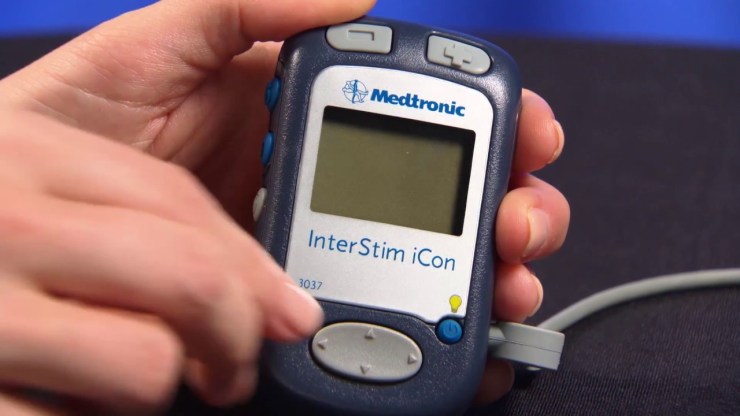
Manufactured by Medtronic, the InterStim Therapy System is surgically implanted device designed to help patients reduce the number of urinary and bowel accidents. It is FDA-approved for patients with urinary orfecal incontinence who have failed to respond to, or could not tolerate, more conservative treatments. How exactly does it work? An implanted neurostimulator delivers an electrical pulse to the sacral nerve, which controls the bladder and anal sphincter. This pulse is sent via a handheld programmer.
During the clinical trial that found InterStim Therapy could reduce bowel accidents by half (and in some patients, restore full continence of bowel movements), reported InterStim Therapy side effects included infection, pain at the site, “pins and needles” and the neurostimulator breaking through the skin. But what about in the real world? That’s where PatientsLikeMe comes into play.
According to the six treatment evaluations of InterStim Therapy submitted by PatientsLikeMe members (10 of whom currently report using the device), reported side effects included “bladder problems,” “annoying sensation” and “bowel incontinence.” Three patients rated the side effects as “Mild,” while three others reported no side effects.
Curious to hear more? Here’s what three patients, all of whom report multiple sclerosis (MS) as their primary condition, had to say in the freeform section of their evaluation:
“It has helped me! Aside from the surgery pain and the seizure I endured, I would have it implanted again.”
“Taking the InterStim was an act of desperation. I was about twenty when my bladder started to fail. The leaking and frequency still continue to be a problem.”
“The impact this device has had on my daily life is incredible. I truly feel this is the best thing I could ever have done for myself and my MS symptoms.”
JOIN PATIENTSLIKEME TODAY
Have you been implanted with an InterStim Therapy device? Join PatientsLikeMe and add your experiences with InterStim effectiveness, side effects and more to our growing body of knowledge. Then, stay to exchange advice and support, research common treatments and learn from other patients like you.
Due to our founders’ personal experience with this disease, ALS was the very first condition to have a home at PatientsLikeMe when we launched in 2006. Five years later, our ALS members now represent the largest ALS patient population in the world, capturing 10% of all newly diagnosed patients in the U.S.
Here are some quick facts about ALS, as reported by our members:
Watch the full four-part piece (entitled “The Campaign of His Life”) to see how both Governor Cellucci and the Heywood family are fighting back against ALS.
“You’re the patient who’s taking the medication.But industry can act almost like a friend who’s walking with you.And that relationship has never been the case in healthcare.Never.” – David S. Williams III
Last week, we kicked off our latest video series with an interview with President and Co-Founder Ben Heywood about the “long road” we’re all on together to change the way healthcare works for patients like you.
This week, Chief Marketing Officer and Head of Business Development David S. Williams III offers his perspective on how our industry partners can take part in this collaborative journey.Listen in to hear his thoughts on a new type of patient-industry relationship that is now possible thanks to social media.
Curious what other parties will share this “road” with us?Stay tuned for next week’s video interview with another member of the PatientsLikeMe executive team.
Now that PatientsLikeMe is open to any patient with any condition, we’ve noticed more patients with different conditions sharing similar lifestyle modifications. One example is the use of a service dog.
What are the benefits - both expected and unexpected - of a four-legged assistant? We asked some of our members to talk about their service dogs’ best qualities.
The Uncanny Seizure Predictor
“[My seizure dog Mandy] has awakened me two times just as a seizure was about to start. I don’t know how she does it but she does. In fact, I had a seizure outside once (doesn’t happen often), and Mandy ran to a neighbor’s house and barked until they came to me.” - Mandysmother (Epilepsy patient)
The Sensitive Tear Licker
“He is my balance dog. He knows when I am about to have a migraine or a seizure and he even knows when I am hurting. Isn’t that funny? He licks my tears when I am crying, and he knows when to stay away from me.” - Some1Special (Mental Health and Behavior patient)
The Good-Humored Mind Reader
“[My service dog Mali] was the best decision I ever made. With her I now have some of my independence again, and for a woman who used to climb mountains and water ski, going to the store again after years never going anywhere alone, this means the world to me. The fact that Mali has a sense of humor and seems to read my mind is only another blessing to go along with my newfound freedom.” - Anahit (Fibromyalgia patient)
The Anti-Tripping Companion
“My neurologist thinks the service dog is preventing my gait from freezing! (When he heels, he constantly moves his head near my knee to check for a command.) I haven’t ended up on the ground or floor since I got him. He is great company! He is always willing to join me on my ‘5 miles/day,’ and since I got him, no one has mistaken my Parkinson’s for being intoxicated!” - FriendlyTraveler (Parkinson’s disease patient)
Do you have an outstanding service dog too? Share your experiences in the comments section and don’t forget to add “service dog” to your list of lifestyle modifications.
Introduced in 1934 by Standard Process, Cataplex F is a whole food dietary supplement designed to support the thyroid as well as the body’s natural response to inflammation. Containing iodine for thyroid support, Cataplex F promotes healthy skin and hair, the metabolism of fats and the formation of eicosanoids (signaling molecules that play a role in inflammation, immune responses and the central nervous system). This supplement also contains flaxseed, a natural source of Omega-3 fatty acid precursors.
At PatientsLikeMe, where more than 125,000 patients are sharing their experiences with all types of treatments including prescription drugs, over-the-counter drugs and supplements, two patients report taking Cataplex F for hypothyroidism. Both report taking this supplement for 1-2 years or more. What can we learn from these patients’ experiences? According to the one treatment evaluation submitted for Cataplex F, there were no reported side effects, but the effectiveness was unclear, as the patient selected the option, “Can’t tell.” Cost was reported as $25 or less per month for a daily dosage.
This patient even goes on to share her doctor’s take: “dubious.” But what about you? How would you evaluate your experience with Cataplex F? Has it helped you or seemingly had no effect? Help others decide whether to start – or continue – taking this supplement by sharing your experiences at PatientsLikeMe, where more than 2,300 patients with hypothyroidism (92% female; 8% male) would love to hear your thoughts.
JOIN PATIENTSLIKEME TODAY
Have you taken Cataplex F or another over-the-counter supplement for hypothyroidism? Join PatientsLikeMe and add your experiences to our growing body of knowledge. Then, stay to exchange advice and support, research common treatments and learn from other patients like you.
Beginning as early as January, our fibromyalgia members have worked together to order t-shirts, send letters to TV shows and spread the word about fibromyalgia through their online social networks.
So what’s fibromyalgia really like? The best way to find out is from patients directly. Since we opened our doors to fibromyalgia patients in November 2008, we’ve had 13,826 fibromyalgia patients join our community and share their real-world experiences with this chronic pain disorder, which is characterized by pain or aching in the muscles as well as multiple points of tenderness.
Among other things, patients with fibromyalgia have reported that:
They also share practical tips for living with this debilitating condition in our forum every day. Some of the most popular topics in the fibromyalgia forum room include sleep issues, pain, research, coping and support.
Here are some recent forum comments about the disease’s effects:
“Sometimes I wonder who I am. It is like all the pain and problems define me. The pain controls my life.” -Fibromyalgia patient, age 50
“Being sick has permeated so much of my life that it comes up in almost every conversation I have.” -Fibromyalgia patient, age 33
To learn more about living with fibromyalgia, you can also explore individual patient profiles to see what people are saying about their symptoms, treatments and quality of life. Get to know one of our fibromyalgia patients today.
“I was diagnosed with lupus (SLE) at age 20 and had already lost about 60% of my kidney function. I had chemotherapy for nine months along with intense steroid therapy. I thankfully went into remission and have been since four months after my diagnosis. I still struggle with fatigue and kidney problems although I was transplanted in 2004. I will need another transplant most likely within the next year or two.”
Since PatientsLikeMe began welcoming all patients last month, we have quickly become home to more than 100 members with systemic lupus erythematosus (SLE), the most common form of this chronic autoimmune disorder that can affect any organ system in the body, including the heart, kidneys, lungs, joints and skin.
Here are some quick facts about SLE gleaned from our new members.
What can you do to increase awareness about lupus? One very visible sign of support is wearing a wristband. At the Lupus Foundation of America, the theme for this year’s awareness month is “Band Together for Lupus,” complete with accompanying purple wristbands. You can also send an awareness e-card and download a flyer and logo for World Lupus Day, which you can then post on Facebook or other social media sites.
Finally, you can click here to sign the World Lupus Day pledge and watch a video featuring spokesperson Julian Lennon, the son of John Lennon. He explains how the Beatles’ famous song “Lucy in the Sky” was written about his childhood friend Lucy, who passed away from lupus.
“We’re just getting started on a long road to really impact your individual disease and your quality of life…”
Each week this month, we’ll be posting a video interview with a member of the PatientsLikeMe executive team. You’ll hear from Ben Heywood, Jamie Heywood, David S. Williams and Paul Wicks, Ph.D. about what the recent changes to PatientsLikeMe mean for patients, research, industry and the entire medical establishment.
Today, listen in to hear what Ben has to say about why we’re on this “road,” what has been improved with the recent upgrades and how sharing your own health journey moves us forward. You can also see last week’s video teaser here.
At PatientsLikeMe, people with every type of condition are coming together to share their health experiences, find patients like them and learn how to take control of their health. The result is improved care for patients as well as an acceleration of real-world medical research.
Stay tuned to our blog for the latest happenings with our company, our patients and our mission of opening up the healthcare system.